


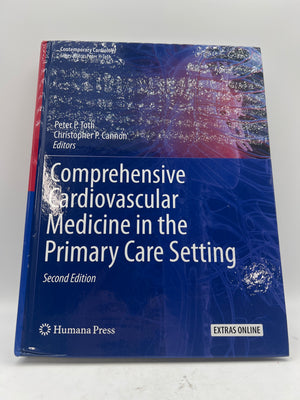
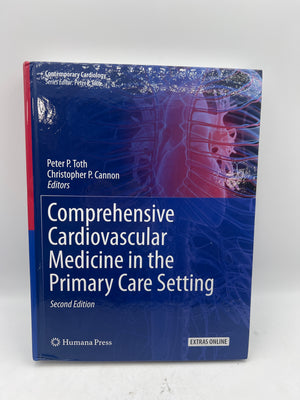
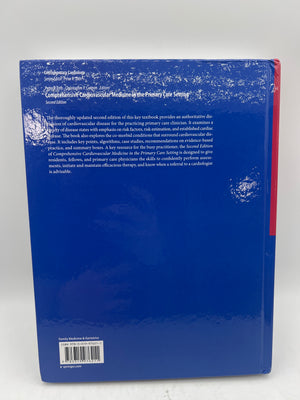

Comprehensive Cardiovascular Medicine in the Primary Care Setting - Essential Guide for Clinicians
Ask a question
Estimate delivery times: 3-7 days.
Return within 30 days of purchase.
Guaranteed Safe Checkout
Comprehensive Cardiovascular Medicine in the Primary Care Setting - Essential Guide for Clinicians
Condition: Open Box, Grade A
This essential guide gives clinicians concise tools to manage cardiovascular medicine in primary care. Short chapters cover risk factors and key conditions. Authors emphasize how to estimate risk and address common co-morbidities. This edition helps practitioners provide better patient care, fast.
Comprehensive Cardiovascular Medicine in the Primary Care Setting explains common cardiac concerns using direct language. This authoritative book suits busy doctors, residents, fellows, and advanced students. Clear points, case studies, and simple practice recommendations help reinforce clinical skills. Each section summarizes main ideas for quick review.
Written by leading experts Dr. Peter P. Toth and Dr. Christopher P. Cannon, this 536-page hardcover is part of the respected Contemporary Cardiology series. This resource supports decision-making in office settings. Evidence-based advice helps you start, adjust, and stop therapies as needed. Real-life cases explain what to do step-by-step.
The book divides content into five straightforward parts:
- Part I: Cardiovascular Risk Factors — Learn about high blood pressure, bad cholesterol, obesity risk, metabolic syndrome, and more.
- Part II: Coronary Artery Disease — Find out how to assess chest pain. Learn about managing heart attacks, using stents, and when to use coronary bypass or rehabilitation.
- Part III: Peripheral Forms of Venous and Arterial Disease — Identify and treat carotid artery disease, peripheral arterial disease, deep vein blood clots, and related problems.
- Part IV: Cardiac Disease — Diagnose and treat valve disorders and pericardial issues. Recognize dangerous arrhythmias and address heart failure.
- Part V: Cardiac Imaging — Understand the uses of coronary calcium scoring, CT angiograms, and cardiac MRI.
Every chapter supplies practical guidance. Learn when to treat or refer. Algorithms condense complex decisions quickly. Use the book’s clinical cases to solve tricky situations. Gain new confidence in your cardiovascular judgment.
Many readers use this book as a trusted reference at work. It fits into a primary care workflow, offering support in difficult cases. Whether updating your clinical skills or learning new information, this handbook meets most daily needs. Most topics use charts and comparison tables to speed up reading.
This guide is not only about disease treatment. It helps you prevent health issues before they occur. The authors teach clear strategies for lowering cardiovascular risk. Learn how managing blood sugar, blood pressure, and cholesterol prevents heart attacks and strokes. This holistic approach raises the standard of preventive care in primary settings.
This volume is useful for both those new to cardiology and experienced clinicians. Review key concepts quickly. Find detailed explanations on conditions seen often in general practice. Use the latest studies and guidelines to inform your work. The structure makes it easy to locate answers when you need them most.
If you are seeking more information on how cardiovascular diseases affect primary care, review the Wikipedia article on cardiovascular disease for additional resources and context.
Frequently Asked Questions (FAQ)
- Question: Who are the authors of this guide, and what experience do they have?
- Answer: Dr. Peter P. Toth, MD, PhD, and Dr. Christopher P. Cannon, MD, wrote this book. Both are recognized experts in cardiology. Dr. Toth is known for research on lipid management. Dr. Cannon has published many studies on cardiovascular outcomes. Their backgrounds bring real-world experience and academic detail to every topic.
- Question: What main subjects are included in this book for primary care clinicians?
- Answer: The book includes risk estimation, common and rare heart diseases, and co-existing conditions. It describes how to evaluate hypertension, hyperlipidemia, and diabetes as well. There are sections on emergencies, rehabilitation, and advanced imaging tests. Each topic connects back to typical needs in a primary care office, so readers always find practical ideas.
- Question: Can medical students use this guide? What benefits does it offer them?
- Answer: Yes, medical students can use this resource. It expands on basic learning from core curricula. The book features stepwise approaches to diagnosis and treatment. Case studies help students see how to apply classroom learning to real patient scenarios. Though focused on primary care, even those with limited experience gain valuable knowledge from its straightforward explanations.
- Question: Does this book help with patient education or is it strictly clinical?
- Answer: This book provides not only clinical strategies but also aids patient communication. Each section includes helpful tips for explaining diseases. Doctors can use sample conversations and simple diagrams found inside. This makes it easier to educate patients and increase compliance with therapy plans.
For a broader selection, visit our general-merchandise Collection for more resources in healthcare and medicine.
Keywords: cardiovascular, medicine, primary, care
Our happy customers
Real reviews from real customers


